
Baby Naming Ceremony: How Soon After Birth Should You Hold One?
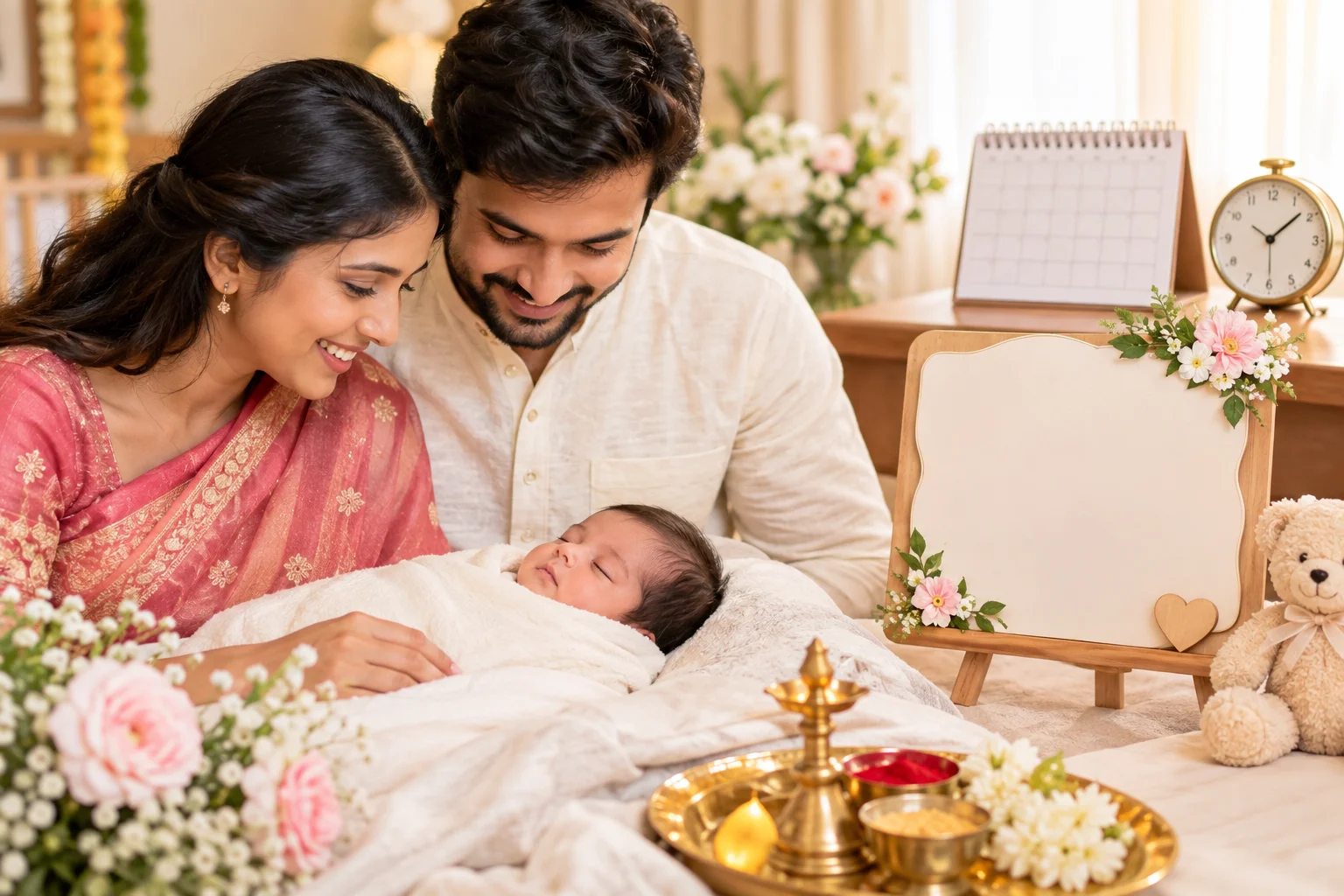
There is no single rule for how soon after birth to hold a baby naming ceremony. Many religious traditions name the baby between the 7th and 12th day, while secular and civil naming ceremonies are commonly held between 6 weeks and 6 months, and can be later. Choose a date when the mother has recovered, the baby is well, and key guests can attend.
You have a name (or a shortlist), a healthy baby, and relativeF s asking when the celebration will be. The big question is timing. Should a baby naming ceremony happen in the first week, or is it fine to wait until your baby is three months old, or even a year?
The honest answer is that there is more flexibility than most families expect. Some traditions set a specific day, such as the seventh, eighth or eleventh day after birth. Non-religious and civil ceremonies have no deadline at all. What matters is that the mother has recovered enough to enjoy the day, the baby is well, and the people who matter most can be there.
This guide explains typical timings by tradition, how to choose a date that suits your family, and what to do if you are running early, late or somewhere in between. You will also find a planning timeline, a checklist, sample invitation wording and answers to common questions.
What Is a Baby Naming Ceremony, and Why Does the Timing Vary So Much?
A baby naming ceremony is a celebration where a family formally announces and blesses their child's name in front of relatives and friends. It may be religious, cultural or entirely secular, and it may include prayers, readings, promises from parents and supporters, symbolic rituals and a shared meal.
Timing varies because the ceremony means different things in different communities. Where the naming is a religious rite, the date is usually set by scripture, custom or a priest. Where it is a family celebration, the date is set by what suits the family. Both approaches are valid.
Naming ceremony vs christening
A christening is a Christian baptism ceremony in which the child is welcomed into the church, and it is usually held in a church or chapel, often within the first few months. A naming ceremony is a broader term. It can be held by any faith or none, in almost any place, and at almost any age. If you want a celebration without a specific religious framework, a naming ceremony gives you the freedom to choose your own date, venue and format.
A naming ceremony is not birth registration
A naming ceremony is a celebration, not a legal step. Registering the birth and receiving a birth certificate follow official deadlines that are separate from any ceremony. In India, births are generally required to be reported within 21 days, and other countries set their own limits. Check the rules where you live, and register the name officially even if the celebration comes months later.
Baby Naming Ceremony Timing by Tradition
The table below shows the most common timings. Treat it as a guide, because customs differ between families, regions and individual priests or officiants, and many modern families adjust the date for practical reasons.
|
Tradition |
Typical timing |
Notes |
|
Hindu (Namakarana) |
Often the 11th or 12th day; some families choose the 16th, 21st or 28th day |
The date is often set with a priest, sometimes based on the baby's star or birth chart. Many families later hold it on a convenient auspicious day. |
|
Islamic (Aqiqah) |
Recommended on the 7th day |
Many families hold it later if the 7th day is not possible, such as on the 14th or 21st day or afterwards. Guidance can vary, so ask your imam or scholar. |
|
Jewish |
Boys: 8th day (brit milah). Girls: often the first Shabbat after birth or within the first weeks |
Baby-naming ceremonies for girls are flexible, and many families hold them weeks or months later. |
|
Sikh (Naam Karan) |
No fixed day; often within the first few weeks |
Held at the gurdwara when mother and baby are ready to attend. |
|
Christian (christening or baptism) |
Commonly within the first few weeks to months |
Timing depends on the denomination and the parish. Speak with your church. |
|
Akan (Ghana), outdooring |
Traditionally the 8th day |
The baby is formally introduced to family and community and given a name. |
|
Yoruba (Nigeria) |
Traditionally around the 7th to 9th day |
Timing has traditionally differed for girls and boys, and families vary. |
|
Humanist, civil or secular |
Any time; commonly 6 weeks to 6 months, sometimes later |
There is no religious deadline, so you can plan around your family and season. |
|
Pagan or Wiccan |
Often a few weeks to several months |
Often timed to a season, a moon phase or a family gathering. |
If your ceremony is part of a faith tradition, the most reliable step is to ask your priest, imam, rabbi, granthi or elder what is expected and what is flexible. Most religious communities have a customary date and an accepted alternative if the customary date is not practical.
How to Choose the Right Date for Your Family
If you are free to choose, use these four questions to narrow down your date. Together they usually point to a window of six to twelve weeks after birth for secular ceremonies, and to the traditional day (or the nearest practical date) for religious ones.
1. Has the mother recovered enough to enjoy it?
The first weeks after birth involve healing, feeding, broken sleep and adjustment. A ceremony in the first week or two can feel like hosting a small wedding on very little rest. If you choose an early date, keep it small, keep it at home and delegate everything you can. If you have a caesarean birth or a difficult recovery, giving yourself a few extra weeks is completely reasonable.
2. Is the baby healthy, and is the setting suitable?
Newborns are more vulnerable to infections, and large gatherings mean more hands, more visitors and more chances to catch a cold. Many families choose a smaller ceremony in the early weeks, or wait until after the first round of vaccinations. Ask your paediatrician for advice based on your baby's health, especially if the baby was premature or needs medical care. Whatever the date, ask anyone who is unwell to stay home, and have hand sanitiser available.
3. Can the important people be there?
Grandparents travelling from another city or country often need several weeks' notice. Check school holidays, festival calendars, exam seasons and, in India, the monsoon or peak summer heat if you plan an outdoor event. A slightly later date that allows key relatives to attend is often better than an early date without them.
4. Have you chosen the name, and are you sure?
Do not let the date force a rushed decision. If you and your partner are still deciding, use the waiting time well. Talk through family traditions, meaning, pronunciation, initials and how the name sounds with your surname. Browsing name ideas by meaning, theme or tradition on Jollynames.ai can help you compare options calmly and agree on a name you both love before you announce it to everyone.
Do guest numbers and budget affect timing?
They can. A small ceremony at home can be arranged in a week or two. A larger event with a hall, caterers, decorations and printed invitations usually needs four to eight weeks. If you are planning a naming ceremony on a budget, picking an off-peak day and a home venue often saves more than any other single decision.
Common Timing Situations and What to Do
• Your baby is in the NICU or you are still recovering. There is no need to rush. Many families hold the ceremony once the baby is home and settled, and some combine it with a first-birthday celebration. Religious traditions typically allow a delayed date in these circumstances.
• You have not chosen a name yet. Register the birth on time, then hold the ceremony once the name is final. It is perfectly acceptable to celebrate later than planned.
• Important family live abroad. Schedule around their travel dates. Or hold a small ceremony on the traditional day and a larger celebration later, and include distant relatives by video call.
• You missed the traditional day. Speak with your priest or community elder. Most traditions accept a later date, and many families choose a convenient day soon after.
• Your baby is now several months or a year old. It is not too late. Naming ceremonies can be held at any age, and some families hold them at the first birthday to make one bigger celebration.
Baby Naming Ceremony Timeline and Planning Schedule
Use this schedule for a ceremony held around 8 to 12 weeks after birth. If you are following a traditional early date, such as the 11th day, compress the plan and begin during pregnancy.
|
When |
What to do |
|
During pregnancy |
Talk to family about traditions and expectations. Shortlist names. Ask your priest or officiant about customary dates. |
|
First 2 weeks after birth |
Rest and bond. Register the birth. Confirm the name with your partner. Choose a target date or date range. |
|
6 to 8 weeks before |
Set the date. Book the venue, officiant or priest. Draft the guest list and estimate the budget. |
|
4 to 6 weeks before |
Send invitations or WhatsApp messages. Book caterer, photographer and decorator. Ask supporters (godparents, mentors, or elders) to take part. |
|
2 to 3 weeks before |
Confirm RSVPs and dietary needs. Choose readings, poems or blessings. Plan the outfit for the baby and the family. |
|
1 week before |
Finalise the program and seating. Prepare your short speech. Arrange decorations, keepsakes and any guest favours. |
|
Day before |
Check the baby's outfit and essentials, food delivery times and the venue set-up. Get an early night. |
|
Ceremony day |
Keep the schedule light, allow time for feeds and naps, and ask a friend to manage photos and guests so you can be present. |
|
After the ceremony |
Send thank-you messages, share photos and store any certificates, cards or keepsakes. |
A simple ceremony program (about 45 to 60 minutes)
• Welcome and a short introduction by the host or officiant
• Parents share why they chose the name and what it means
• Prayers, readings or blessings (religious or secular)
• Naming: parents say the name aloud and guests welcome the baby by name
• Promises or wishes from grandparents, godparents or supporters
• A symbolic ritual, such as lighting a candle, planting a sapling or signing a keepsake book
• Photographs, a shared meal and gift giving
Baby Naming Ceremony Checklist
☐ Decide the tradition, the date range and the level of formality
☐ Confirm the baby's name and register the birth on time
☐ Fix the guest list, the budget and the venue
☐ Book the officiant or priest, caterer, decorator and photographer
☐ Send invitations and track RSVPs
☐ Choose readings, blessings or speeches
☐ Plan the food menu, including dietary needs and baby-friendly seating
☐ Arrange the outfit, keepsakes and guest gifts
☐ Prepare a quiet space for feeding and nap breaks
☐ Assign a friend or relative to help on the day
Sample Invitation Wording for Different Timings
Short and warm (WhatsApp)
"Hi! We are so happy to share that we will be celebrating our baby's naming ceremony on [date] at [time], at [venue]. We would love for you to join us and bless our little one. Please let us know if you can make it. With love, [Parents' names]"
Traditional day-based ceremony
"With the blessings of the elders, we invite you to the naming ceremony of our daughter/son on the [11th] day after birth, [date], at [time] at [address]. Your presence and blessings will make the day complete. Lunch will follow."
Later ceremony with a flexible feel
"Our baby is [X] months old and it is finally time to celebrate! Please join us for a naming ceremony on [date] at [venue]. We will share the name, a few words and some cake. Children are welcome."
Common Mistakes to Avoid
• Choosing a date before checking recovery and health. Keep the date flexible until you know how you and your baby are doing.
• Inviting too many people too soon. A smaller early ceremony can be followed by a larger celebration later.
• Assuming there is one correct tradition. Even within one faith, customs differ. Ask your own priest or elders.
• Forgetting the official registration. The ceremony does not replace the legal process.
• Leaving the name until the last minute. Agree on it well before the invitations go out.
• Overloading the schedule. Babies need feeds, naps and quiet moments, so plan the ceremony around them.
Frequently Asked Questions
How soon after birth should we have a baby naming ceremony?
It depends on your tradition. Many religious ceremonies take place between the 7th and 12th day, while secular naming ceremonies are commonly held between 6 weeks and 6 months. If the choice is yours, wait until the mother has recovered and the baby is healthy.
Is it okay to have a naming ceremony after one month?
Yes. Many families choose one to three months because it gives the mother time to recover, allows guests to travel, and lowers the risk of exposing a very young newborn to large crowds.
Is 6 months too late for a baby naming ceremony?
No. There is no fixed age limit. Some families hold ceremonies at six months, at the first birthday or even later, particularly for secular or civil celebrations.
Can we hold a naming ceremony before the baby is born or in the first week?
It is possible for some traditions to hold the ceremony in the first week, but a ceremony before birth is not typical. Any early ceremony should be small and low-stress for a new mother and baby.
Do we have to register the baby's name before the ceremony?
You should follow your local birth-registration rules regardless of when the ceremony takes place. In India, births are generally reported within 21 days. Registration and the ceremony are separate.
What is the difference between a naming ceremony and a christening?
A christening is a Christian baptism ritual in a church. A naming ceremony can be religious, cultural or secular, and it is usually more flexible in date, venue and format.
How long should a baby naming ceremony last?
Most ceremonies last 30 to 60 minutes, followed by a meal or refreshments. Keep it short if the baby is very young.
How many guests should we invite?
Only as many as you can host comfortably and safely. Early-weeks ceremonies are usually small, with close family only. Larger events are easier after the first few months.
Can we celebrate without a religious ceremony?
Yes. Civil and humanist naming ceremonies are led by a celebrant or a family member, and often include a welcome, a naming moment, wishes for the baby, a poem or reading, and a shared celebration.
The best time for a baby naming ceremony is the time when your family can be present, rested and relaxed. If your tradition specifies a day, honour it, and ask your elders where flexibility is possible. If you are free to choose, a date some weeks after the birth often gives you more calm, more guests and a more meaningful day.
Whatever date you choose, the name is the heart of the ceremony. Take time to explore meanings, traditions and sounds together as a family. Jollynames.ai can help you discover names that fit your preferences, themes and family values, so that when you say your baby's name aloud for the first time, you feel entirely sure of it.