
How Long Does a Baby Naming Ceremony Take?
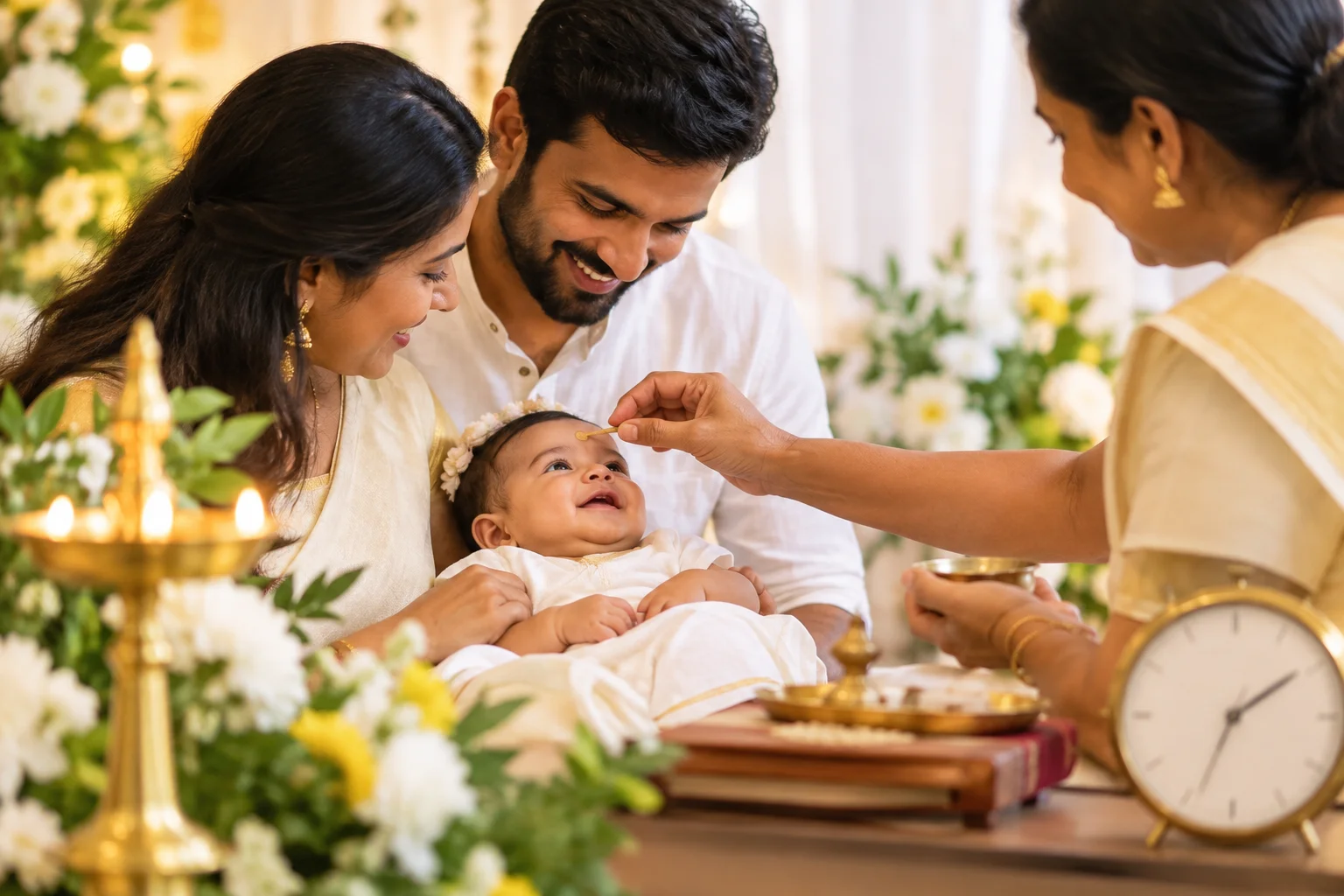
A baby naming ceremony itself usually takes 30 to 90 minutes, with 45 to 60 minutes the most common. The full event, including arrivals, photographs and a shared meal, typically lasts two to three hours. Home ceremonies are often shorter, while religious or cultural ceremonies with several rituals can run longer. Plan around the baby's feeding and nap times.
Whether you are hosting or attending, one practical question comes up early: how long does a baby naming ceremony take? Guests need to know when to arrive, relatives travelling in need to plan their day, caterers need a start time, and parents need a plan that works around a newborn's feeds and naps. The honest answer is that it varies, because a naming ceremony has no fixed format and families shape it around their traditions.
This guide explains how long the ceremony itself usually lasts, how long the whole gathering runs, what stretches or shortens the timing, and how to build a schedule that keeps the baby comfortable and guests engaged. You will find sample 30-, 60- and 90-minute programs, a planning checklist and answers to common timing questions.
How Long a Baby Naming Ceremony Usually Takes
There are two numbers to keep in mind: the length of the ceremony itself, and the length of the whole gathering. Guests mostly want the second one, while the leader and parents plan the first.
|
Type of ceremony |
Ceremony itself |
Whole event |
Typical guests |
|
Short family blessing at home |
20 to 40 minutes |
1.5 to 2 hours |
10 to 25 |
|
Standard home or hall ceremony |
45 to 60 minutes |
2 to 3 hours |
25 to 60 |
|
Ceremony with readings, rituals and a keepsake activity |
60 to 90 minutes |
3 to 4 hours |
30 to 80 |
|
Cultural or religious ceremony with several customs |
60 to 120 minutes or more |
3 to 5 hours |
50 or more |
|
Name revealing ceremony or party |
15 to 30 minutes for the reveal |
2 to 3 hours |
20 to 60 |
These ranges are typical guides, not rules. Families set the pace, and some traditions have their own set order and duration.
The ceremony vs the whole event
The ceremony is the formal part: the welcome, the name, readings, promises and any ritual. The whole event also includes arrival and settling in, photographs, the meal, cake, speeches and goodbyes. A 45-minute ceremony often sits inside a three-hour event, so tell guests both numbers on the invitation.
Naming ceremony vs christening: which is longer?
A christening usually follows a set order of service in a church, often 30 to 60 minutes, followed by a reception. A naming ceremony is more flexible and can be shorter or longer depending on the family. If you hold both on the same day, plan for a longer day and allow time for travel between venues.
How long should the baby be "on show"?
Most babies stay content for around an hour in a busy room, though some manage less and some more. Place the naming moment early in the ceremony, when the baby is most likely to be calm, and leave the longer readings and rituals for when the baby can be with a trusted relative or resting.
What Makes a Naming Ceremony Shorter or Longer
Eight factors account for most of the difference between a half-hour blessing and a half-day celebration.
|
Factor |
Keeps it shorter |
Makes it longer |
|
Guest count |
Under 25 guests, easy to greet |
60 or more, with longer arrivals and photographs |
|
Number of speakers |
One or two short readings |
Several speakers or long speeches |
|
Rituals and customs |
One simple ritual, such as a candle |
Multiple customs, prayers or stages |
|
Baby's needs |
Short ceremony timed after a feed |
Feeding, changing or settling breaks |
|
Language |
One language |
Translation or bilingual readings |
|
Venue |
A single room with seating ready |
Moving between rooms, outdoor setup or a ceremony plus a separate reception |
|
Meal style |
Light refreshments or a buffet |
A formal sit-down meal with speeches |
|
Photographs |
A few group shots |
Individual family portraits and a posed session |
Other things that stretch the day
• Late arrivals. Guests who travel long distances or arrive from different places can delay the start.
• Technology. A livestream, sound check or slideshow adds setup time.
• Unscripted moments. Open microphones where anyone can speak often overrun.
• Children. A children's activity during the ceremony may add a few minutes, but keeps everyone calmer.
Things that keep it on time
• A written program shared with everyone who has a role.
• A named timekeeper, such as a sibling or friend, who gently signals the end of each part.
• A sound check and a reading rehearsal beforehand.
• A clear start time on the invitation, with a short "arrive by" window.
• A food plan that is ready when the ceremonamingny ends.
Sample Naming Ceremony Programs: 30, 60 and 90 Minutes
Use these as starting points. Move, merge or drop parts to suit your family and any traditions you follow.
A 30-minute ceremony
Best for small gatherings at home and families who prefer a simple welcome.
|
Time |
Moment |
|
0:00 |
Welcome from the leader |
|
0:05 |
Name announcement and its meaning |
|
0:12 |
One reading or blessing |
|
0:18 |
Promises from parents or supporters |
|
0:23 |
A candle lighting or a wish for the baby |
|
0:28 |
Toast and photograph |
A 60-minute ceremony
The most common format, with space for several voices and a ritual.
|
Time |
Moment |
|
0:00 |
Welcome and introduction |
|
0:05 |
Name announcement and its story |
|
0:15 |
Two or three readings or blessings |
|
0:30 |
Promises from parents and supporters |
|
0:38 |
A symbolic ritual, such as a candle, tree planting or wish tying |
|
0:50 |
Toast and group photograph |
|
0:60 |
Meal begins |
A 90-minute ceremony
Suits larger gatherings, bilingual ceremonies and those with several customs.
|
Time |
Moment |
|
0:00 |
Welcome, introductions and a short explanation of the day |
|
0:10 |
Opening reading or prayer |
|
0:20 |
Name announcement and its story |
|
0:30 |
Readings and blessings from family members |
|
0:45 |
Promises or pledges |
|
0:55 |
One or two symbolic rituals |
|
1:10 |
Keepsake activity, such as signing a book or adding to a memory box |
|
1:20 |
Toast, group photographs and a closing word |
The whole-day timeline
Here is how a 60-minute ceremony fits into a typical three-hour event.
|
Clock time |
What happens |
|
11:00 a.m. |
Guests arrive, drinks and a photo wall |
|
11:30 a.m. |
Ceremony begins |
|
12:30 p.m. |
Toast, cake and group photographs |
|
12:45 p.m. |
Meal is served |
|
1:45 p.m. |
Keepsake activity and quieter socialising |
|
2:15 p.m. |
Goodbyes and thank-yous |
How to Plan the Timing of Your Naming Ceremony
Choose the best time of day
|
Time of day |
Advantages |
Things to watch |
|
Morning (10 a.m. to 12 noon) |
Babies are often alert after a morning feed, and a meal follows naturally |
Early starts are hard for guests who travel |
|
Midday (12 noon to 2 p.m.) |
Suits a lunch ceremony and most guest schedules |
May clash with a nap |
|
Afternoon (2 p.m. to 5 p.m.) |
A relaxed pace and tea-time food |
The baby may be sleepy or fussy |
|
Evening (5 p.m. to 8 p.m.) |
Easier for working guests |
A tired baby and a late finish |
Watch your baby for a few days to find their calmest window, then plan the naming moment inside it.
Plan around the baby
1. Time the key moment. Schedule the name announcement for when the baby is typically fed, rested and alert.
2. Feed before the ceremony. A fed baby is easier to hold and photograph.
3. Set up a quiet space. Parents need somewhere to feed, change and settle the baby.
4. Keep a spare plan. If the baby needs a break, pause for a toast or a song and carry on afterwards.
5. Be flexible. A short delay for a feed is a normal part of the day.
Plan the speakers and readings
Set a limit of one to three minutes per speaker and ask them to prepare something short. Share the order of speakers, and give the leader a signal to wrap up if someone runs long.
Plan the meal
Aim to serve food within 15 to 30 minutes of the ceremony ending, since guests are usually hungry by then. If you are using a caterer, share the program and a flexible serving window rather than a fixed minute.
Plan for guests who travel
If guests travel a long distance, start at a time that is realistic for them and tell them how long to expect to stay. Share parking, public transport and a map pin, and consider sending a reminder with the start time and an "arrive by" window.
Plan backward from the start time
Start with the time you want to eat, then work backwards. If lunch is at 12:45 p.m. and the ceremony takes an hour, the ceremony starts at 11:30 a.m. and guests arrive from 11:00 a.m. Add 10 to 15 minutes to every part of the schedule that involves other people, because groups always move more slowly than plans.
Common Timing Mistakes and How to Fix Them
|
Mistake |
What happens |
Better approach |
|
Giving only a start time |
Guests do not know how long to stay or when food arrives |
List the start time, the expected end time and when lunch is served |
|
Scheduling over a nap or feed |
A fussy baby at the key moment |
Plan around the baby's best hour and keep a quiet space |
|
Too many speakers |
The ceremony drags and guests tire |
Limit to two or three speakers, one to three minutes each |
|
Unlimited open-mic time |
One story leads to ten and the schedule collapses |
Offer a wish card or a keepsake book instead |
|
No time for photographs |
Everyone is hungry and photographs get rushed |
Allow 10 to 15 minutes for group photographs |
|
Food that is not ready |
Guests wait with nothing to do |
Ask the caterer or helpers to be ready as the ceremony ends |
|
Forgetting setup and cleanup |
Hosts arrive stressed and leave exhausted |
Allow 1 to 2 hours before and 30 to 60 minutes after |
|
Not allowing for late arrivals |
The ceremony starts without key people |
Add a 10 to 15 minute buffer or an "arrive by" time |
|
Overpacking the program |
A tired baby and restless guests |
Choose a few meaningful moments and let the rest breathe |
If the ceremony runs over
Stay calm and shorten what remains. Trim a reading, skip a repeated blessing, or move a keepsake activity to the meal. Guests rarely remember a few minutes of overrun. They remember whether the day felt rushed.
If the baby needs a break
Pause the ceremony for a moment and let a relative take over, or carry on with a toast while the parents settle the baby. Pick up the program where you left off. A pause during a ceremony for a newborn is entirely normal.
Timing Checklist and Invitation Wording
Timing checklist
• ☐ Decide on the ceremony length: 30, 60 or 90 minutes
• ☐ Choose the time of day that suits the baby, the guests and the meal
• ☐ Set a written program and share it with the leader and readers
• ☐ Limit speakers to one to three minutes each
• ☐ Name a timekeeper to give gentle signals
• ☐ Add a 10 to 15 minute buffer for arrivals and photographs
• ☐ Plan the food service so that it starts right after the ceremony
• ☐ Set aside a quiet place for feeding and settling the baby
• ☐ Allow time to set up beforehand and tidy up afterwards
• ☐ Rehearse the naming moment and check the sound
• ☐ Tell guests the start time, the expected end time and when lunch is served
• ☐ Send a reminder with an "arrive by" window
Invitation lines that state the timing clearly
Guests appreciate knowing both the ceremony time and how long the event will run.
The ceremony begins at 11:30 a.m. and lunch will follow at about 12:45 p.m. We expect to finish by 2:00 p.m.
Please arrive between 11:00 and 11:20 a.m. so we can start on time.
The naming itself is a short, 45-minute ceremony, followed by a relaxed lunch. Feel free to stay as long as you like.
We will pause briefly if the baby needs a feed. Thank you for your patience and kindness.
For more help with the wording, see our guide to naming ceremony invitation wording.
Frequently Asked Questions
How long does a baby naming ceremony take?
The ceremony itself usually takes 30 to 90 minutes, with 45 to 60 minutes the most common. The whole gathering, including food and photographs, typically lasts two to three hours.
How long should a naming ceremony be for a newborn?
For a newborn, aim for 30 to 45 minutes, timed after a feed. Newborns tolerate short periods in a busy room, so put the naming moment first and keep the readings brief.
Is a naming ceremony shorter than a christening?
Often, though it depends. A christening follows a set order of service, usually around 30 to 60 minutes, followed by a reception. A naming ceremony is more flexible and can be as short as 20 minutes or as long as two hours.
How long should each speech be?
One to three minutes is a good limit. A short, heartfelt message is more memorable than a long one, and it keeps the schedule on track.
What time of day is best for a naming ceremony?
Late morning or around midday suits most families, since babies are often alert after a morning feed and a meal follows naturally. Choose the time your baby is usually calmest.
How long do guests usually stay?
Most guests stay for two to three hours, which covers the ceremony, the meal and a little time to chat. Tell guests when the event is expected to end, so they can plan.
How long should I allow for setup?
Allow one to two hours before guests arrive for decorating, food and a sound check, and 30 to 60 minutes afterwards for cleaning up. Ask relatives or friends to help.
Should I serve food before or after the ceremony?
After is usually better, because guests are more focused and the baby is calmer. Offer drinks and light snacks while guests arrive, and serve the main meal within 15 to 30 minutes of the ceremony ending.
What if the baby cries or needs a feed?
Pause for a moment, let a relative step in, or carry on with a toast while the parents settle the baby. A pause is a normal part of a ceremony with a baby, and guests understand.
Can a naming ceremony be held in under 30 minutes?
Yes. A brief naming with a welcome, the name, one reading and a toast can take 15 to 20 minutes. Many families choose a short ceremony followed by a longer, relaxed meal.
How long a baby naming ceremony takes depends less on a rule and more on your family: a 30-minute blessing, a 60-minute ceremony with a ritual or a longer cultural celebration can all be right. Plan the ceremony around the baby's calmest hour, keep speeches short, tell guests both the start time and the expected end, and leave room for a relaxed meal. A little structure gives everyone the freedom to enjoy the moment.
If the name itself is still taking shape, Jollynames.ai can help you explore meaningful, unique and traditional baby names by theme, meaning and family preference. Knowing the name and its story in advance also makes the naming moment shorter and easier to plan.
A good schedule feels like it was never there. Your guests will remember the warmth, the name and the baby, not how many minutes each part took.