
What Should Guests Bring to a Baby Naming Ceremony?
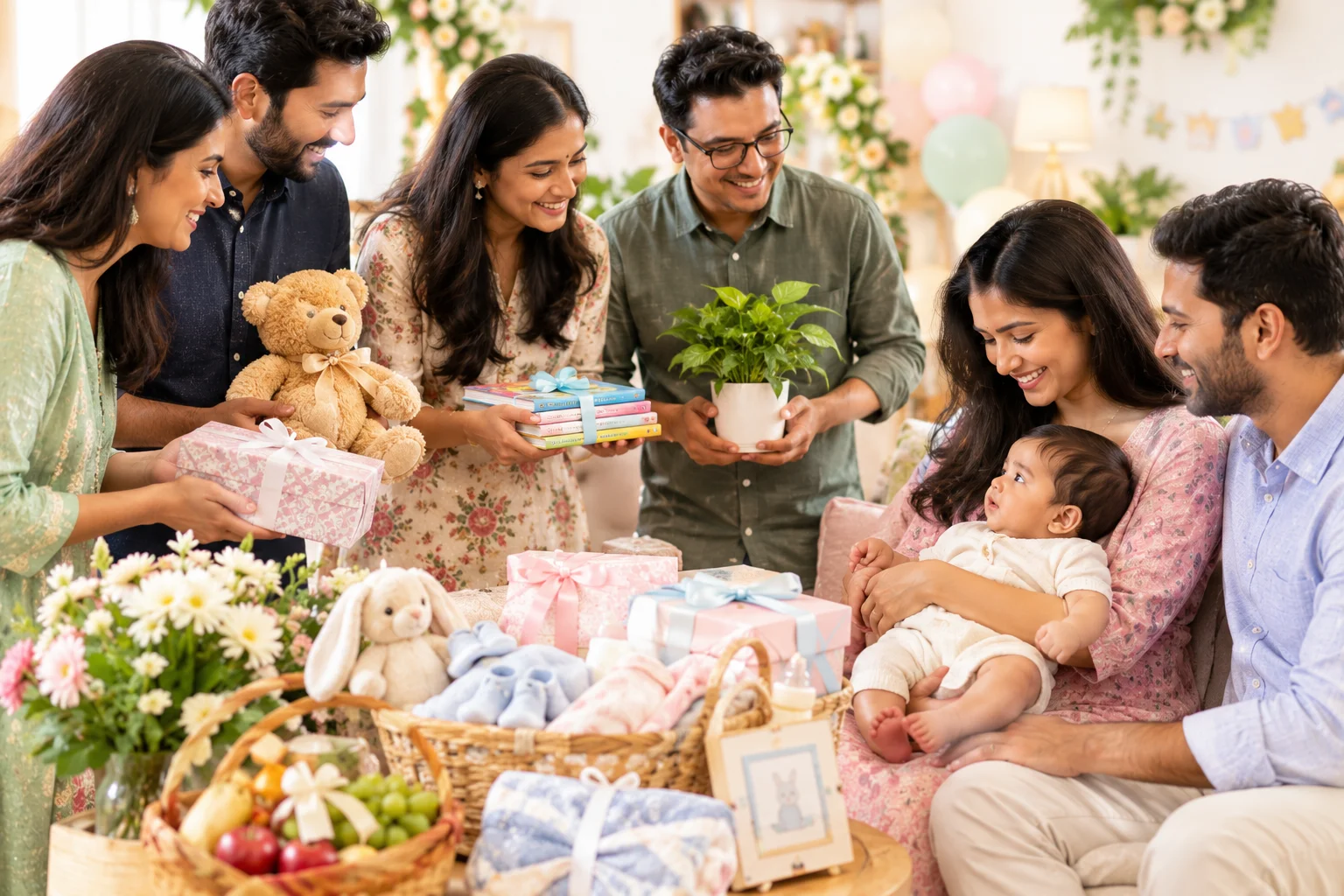
Guests at a baby naming ceremony should bring a card with a heartfelt message and, if they wish, a small gift such as a keepsake, book, clothing or a contribution to the baby's savings. Gifts are appreciated but never required. Check the invitation for requests like "no gifts", and dress smartly casual unless told otherwise.
You have been invited to a baby naming ceremony, and now you are standing in a shop wondering what to bring. Should it be a gift, a card, flowers, a dish for the buffet, or nothing at all? Because a baby naming ceremony has no fixed rules, guests are often unsure what is expected, and that uncertainty can turn a happy invitation into a small worry. This guide answers it clearly. You will find what is appropriate to bring, gift ideas for different budgets, thoughtful non-gift options, what to write in a naming day card, what to wear, cultural notes and the mistakes to avoid. If you are a parent, you will also find a short section on how to tell guests what you would like.
What Is Expected of a Guest at a Naming Ceremony?
A baby naming ceremony is a celebration where parents welcome a child into their family and community, announce the baby's name and often make promises for the years ahead. It is not a legal event and it is not governed by strict etiquette, which is exactly why guests are unsure what to do. Families also differ: some hold a short secular gathering at home, others hold a faith-based rite at a place of worship, and the expectations around gifts and dress can differ accordingly.
Here is the simple version:
• You are not required to bring anything. Your presence is the main gift.
• A card is almost always welcome. It costs little and parents often keep these cards for the child's memory box.
• A small gift is a kind extra. Thoughtful and modest beats expensive.
• The invitation is your best guide. If it says "no gifts" or suggests a donation or a registry, follow it.
Naming ceremony vs christening: do gift customs differ?
A christening is a religious service, and guests often bring traditional gifts such as keepsakes marking the occasion. A naming ceremony can be secular or religious, and gift customs tend to be less fixed. A secular naming day often feels closer to a baby welcome party, where cards, books and personal keepsakes are typical. When in doubt, ask a relative or friend of the family instead of the new parents, who already have plenty on their minds.
What to Bring to a Baby Naming Ceremony: The Essentials
|
Item |
Why it works |
Notes |
|
A card with a handwritten message |
Personal, inexpensive, becomes a keepsake |
Include your name and a wish for the baby |
|
A small, thoughtful gift |
Shows you care |
Optional; avoid duplicating what parents already have |
|
Contribution to a savings fund |
Useful long term |
Check whether parents have shared bank or fund details |
|
A dish or drink, if invited to share |
Eases the host's load |
Only if the host has asked |
|
A reading, memory or blessing |
Adds meaning |
Only if the family has asked you to take part |
|
Your camera or phone, politely used |
Captures moments |
Ask before posting photos online |
Naming Ceremony Gift Ideas for Every Budget
The right gift depends on your closeness to the family and your budget, not on a set price. The ideas below group suggestions by approximate level so you can choose with confidence. Adjust the amounts to your local currency and customs.
Small and thoughtful
• A picture book with a handwritten message on the first page.
• A soft toy or comforter.
• A framed print of the baby's name, or a name meaning.
• A potted plant or sapling that can grow with the child.
• A simple keepsake such as a nursery wall hanging or hand-stamped tag.
Mid-range keepsakes
• A personalised blanket, bib or romper.
• A baby memory book or milestone cards.
• An engraved bracelet, spoon or photo frame.
• A set of board books or a bedtime story collection.
• A custom illustration or name-meaning print.
Meaningful and lasting
• A contribution to a savings account, investment fund or education fund, where the family welcomes it.
• A piece of heirloom-quality jewellery or silverware, where this is customary in the family.
• A tree planted in the child's name.
• A keepsake box for letters, photos and small treasures.
• A letter written to be opened on the child's 18th birthday.
Gifts that do not cost much but mean a lot
• A handwritten letter of wishes.
• A recorded voice or video message for the child to watch when older.
• A family recipe, lullaby or story written out.
• A photo album of family members with names and short notes.
• A promise of time, such as an offer to babysit on a set date.
|
Budget level |
Typical choices |
Best for |
|
Under a small budget |
Card, book, plant, handmade gift |
Colleagues, neighbours, wider friends |
|
Moderate |
Personalised blanket, keepsake, memory book |
Friends, cousins, aunts and uncles |
|
Generous |
Savings contribution, heirloom, tree planting |
Grandparents, godparents or guide parents, very close family |
Practical Ways to Help Instead of (or as Well as) a Gift
New parents often value help more than another soft toy. If you know the family well, consider offering one of these, ideally agreed in advance:
• A home-cooked meal delivered after the ceremony, labelled and ready to heat.
• Help with setup or clean-up on the day, such as arranging chairs or washing up.
• Looking after the baby for a short while so the parents can eat and talk to guests.
• Taking photographs and sharing them afterwards.
• Bringing a dish, drinks or cake if the host has asked guests to contribute.
• Offering to babysit an older sibling during the ceremony.
What to Write in a Naming Day Card
A good card does not need to be long. Two or three sincere sentences are enough. Use this structure: a greeting, a wish for the baby, a personal note and a warm sign-off. Match the tone to your relationship. Warm and personal suits family, while friendly and brief suits colleagues and acquaintances.
Naming ceremony wishes and quotes for close family
"Dear [Name], welcome to the world. Your name already fits you perfectly. We promise to love you, cheer for you and always be here. With all our love, [Your names]"
"To our newest family member, may your name be spoken with joy and your life be full of laughter and adventure. We are so proud to be part of your story."
Messages for friends
"Congratulations on the naming of beautiful [Name]! Wishing you all the joy, patience and sleep you need in the months ahead. So glad to share this day with you."
"What a lovely name for a lovely baby. Thank you for letting us be part of this special day."
Short messages for colleagues and acquaintances
"Warmest congratulations on your little one's naming day. Wishing you and your family every happiness."
"Celebrating with you today. Best wishes to [Name] and to you both."
Messages that honour the name or heritage
"A name carries a story. May [Name] carry yours with pride and add many chapters of their own."
"Named for love and for the people who came before. We are honoured to witness it."
Messages for adoptive and blended families
Naming ceremonies are often chosen by adoptive and blended families, and sometimes for older children. Focus on belonging and welcome, and avoid language that points to how the child joined the family.
"Welcome, [Name]. You belong here, and today we celebrate you and the family you are part of."
"What a joy to see your family grow. Congratulations to all of you on this wonderful day."
Tips for writing the card
• Use the baby's name and spell it correctly. Check the invitation if unsure.
• Write your full name so the child can remember who sent it.
• Add a date, since parents may keep the cards for years.
• Keep humour gentle and about the parents' sleep levels, never the baby or the name.
• Avoid comparing the name with other names or commenting on the choice.
What to Wear to a Naming Ceremony
The right outfit depends on the venue, the family and the time of day. Look at the invitation first. If it is silent, assume smart casual and err slightly towards neat.
|
Setting |
What to wear |
|
At home or in a garden |
Smart casual: a light dress, shirt, or neat trousers. Comfortable shoes suitable for grass. |
|
Hall or hired venue |
Smart casual to smart: a dress, jacket or shirt and tie depending on the invitation. |
|
Place of worship |
Modest and respectful clothing in line with the tradition. Ask a family member about head coverings or footwear. |
|
Cultural or traditional celebration |
Follow the family's lead. Traditional attire is often welcome, but ask first if you are unsure. |
• Choose soft, light or pastel tones if you like, but avoid white if the family is dressing the baby or parents in white, unless the invitation says otherwise.
• Avoid strong perfume near the baby.
• Skip sharp or dangly jewellery you might brush against a baby with.
• Dress in layers for a garden event.
Cultural and Religious Differences Guests Should Know
Naming traditions are as varied as families, so treat the points below as general illustrations and not as rules for every household. Always follow the invitation and ask a trusted relative of the family when unsure.
• Jewish baby namings commonly welcome gifts such as clothing or books, and guests often greet the family with "Mazel tov". Dress depends on whether the event is at home or in a synagogue.
• Hindu naming ceremonies often involve family elders and a priest. Guests may bring small gifts, sweets, fruit or clothing, and traditional or modest attire is often appropriate. Gift norms vary widely by region and community.
• Sikh naming events usually take place around a gurdwara visit. Guests cover their heads and dress modestly, and are often offered shared food (langar) afterwards. Bringing cash is common in some communities, but ask first.
• Muslim families may hold an aqiqah celebration, where guests are often invited to a shared meal. Gifts for the baby, or a modest donation, may be welcome, and modest dress is usual.
• Christian families may hold a christening or dedication followed by a gathering. Keepsakes such as a Bible, a cross or a personalised item are traditional, and church clothing is typically smart.
• Secular naming ceremonies are the most flexible. Cards, books, plants and personalised keepsakes are all common.
When customs differ from your own, curiosity and respect matter more than perfection. Bring a card, dress modestly if unsure and follow the host's lead.
Guest Etiquette and Common Mistakes
What not to bring or do
• Do not bring extra guests without checking, because home ceremonies are limited by space.
• Avoid bringing a very large or noisy gift that the family must carry home and store.
• Do not bring a gift that duplicates a registry item or that clashes with the parents' stated wishes.
• Skip gifts with small parts or loose strings for a newborn.
• Do not arrive late. Ceremonies are short and the baby's schedule is fragile.
• Do not comment on the baby's looks, weight or sleeping unless it is warm and welcome.
• Do not give unsolicited parenting advice.
• Do not post photos or the name online until the parents have shared it, particularly if there is a name reveal.
• Do not insist on holding the baby if the parents are hesitant, especially if you are unwell.
How to behave at the ceremony
• Arrive 10 to 15 minutes early, switch your phone to silent and take a seat quietly.
• Keep conversations low during the readings and the name reveal.
• If you are asked to read or speak, practise beforehand and keep it brief.
• Greet the parents with a warm word and avoid long conversations while they are hosting.
• Thank the hosts before you leave.
For Parents: How to Tell Guests What You Would Like
If you would rather not receive gifts, or you would love a particular kind, saying so kindly on the invitation saves everyone stress. Here is wording you can adapt:
"Your presence is the best gift. If you would like to give something, a handwritten message for [Name] to read when she is older would mean the world to us."
"Please, no gifts. We would be happy if you could bring a favourite children's book with a message inside."
"If you would like to mark the day, we are starting a savings fund for [Name]. Details are available on request."
"We are holding a potluck-style lunch. If you would like to bring a dish, please let us know so we can avoid duplicates."
You can also set up a simple guest book, a memory box for letters or a wish tree where each guest writes a hope for the baby. These give guests something meaningful to do instead of buying a gift.
Finally, keep a list of who gave what, so thank-you notes are easy to write afterwards. If you are still choosing the name, Jollynames.ai offers tools to explore names by meaning, theme and tradition before you announce it to your guests.
Guest Checklist: Before You Go
• Read the invitation for date, time, dress and gift guidance.
• RSVP by the date given and mention any dietary needs.
• Choose a card and write a short message with the baby's name spelled correctly.
• Decide on a gift, a contribution or a helping hand.
• Wrap the gift simply and add a gift tag with your name.
• Plan your outfit and shoes for the venue.
• Check the address, parking and travel time.
• Arrive 10 to 15 minutes early with your phone on silent.
• Ask the parents before sharing photos or the baby's name online.
Frequently Asked Questions
Do I have to bring a gift to a baby naming ceremony?
No. A gift is a kind gesture but not a requirement. A card with a warm message is usually enough, and presence at the ceremony matters most.
How much should I spend on a naming ceremony gift?
There is no set amount. Spend what is comfortable for you and appropriate to your relationship. Thoughtful, personal items matter more than price.
What is a good gift for a naming ceremony?
Popular choices are personalised keepsakes, books with a message, a memory book, a savings contribution, a plant or tree, and handwritten letters. Check the invitation or ask a relative if the family has preferences.
Can I give money at a naming ceremony?
In many families it is welcome, especially as a contribution to savings. Customs vary, so ask discreetly or follow the invitation. Place it in a card.
What should I write in a naming day card?
Write two or three sincere sentences: greet the family, wish the baby well, add a personal note and sign off with your name. Use the baby's name and match the tone to your relationship.
What should I wear to a baby naming ceremony?
Smart casual is a safe choice for most home and hall ceremonies. For a place of worship or traditional celebration, choose modest clothing and follow the family's guidance.
Should I bring food to a naming ceremony?
Only if the hosts have asked guests to contribute. Otherwise, offering to help with a meal after the ceremony is more useful than arriving with extra dishes.
Can I bring my children to a naming ceremony?
Check the invitation. Many families welcome children, but some home ceremonies have limited space. If in doubt, ask the hosts.
Is it okay to take photos at a naming ceremony?
Usually yes, but ask first and avoid flash near the baby. Do not post photos or the name online until the parents say it is fine.
What if the invitation says no gifts?
Respect it. Bring a card and perhaps a handwritten message, or offer practical help. Arriving with a large gift can make the hosts uncomfortable.
When you are not sure what to bring to a baby naming ceremony, remember that the best contributions are sincere, small and personal. A handwritten card, a book with a message, a plant that will grow with the child or an offer of practical help will be remembered long after the day. Read the invitation closely, follow the family's lead, and focus on celebrating the baby and the parents.
The name is what brings everyone together on the day, so it is lovely to know what it means. If you are a parent still shaping that choice, or a guest who is curious about names and their stories, Jollynames.ai is a friendly place to explore baby names by meaning, theme and tradition.