
What Do You Wear to a Baby Naming Ceremony? A Guide for Guests, Parents and Baby
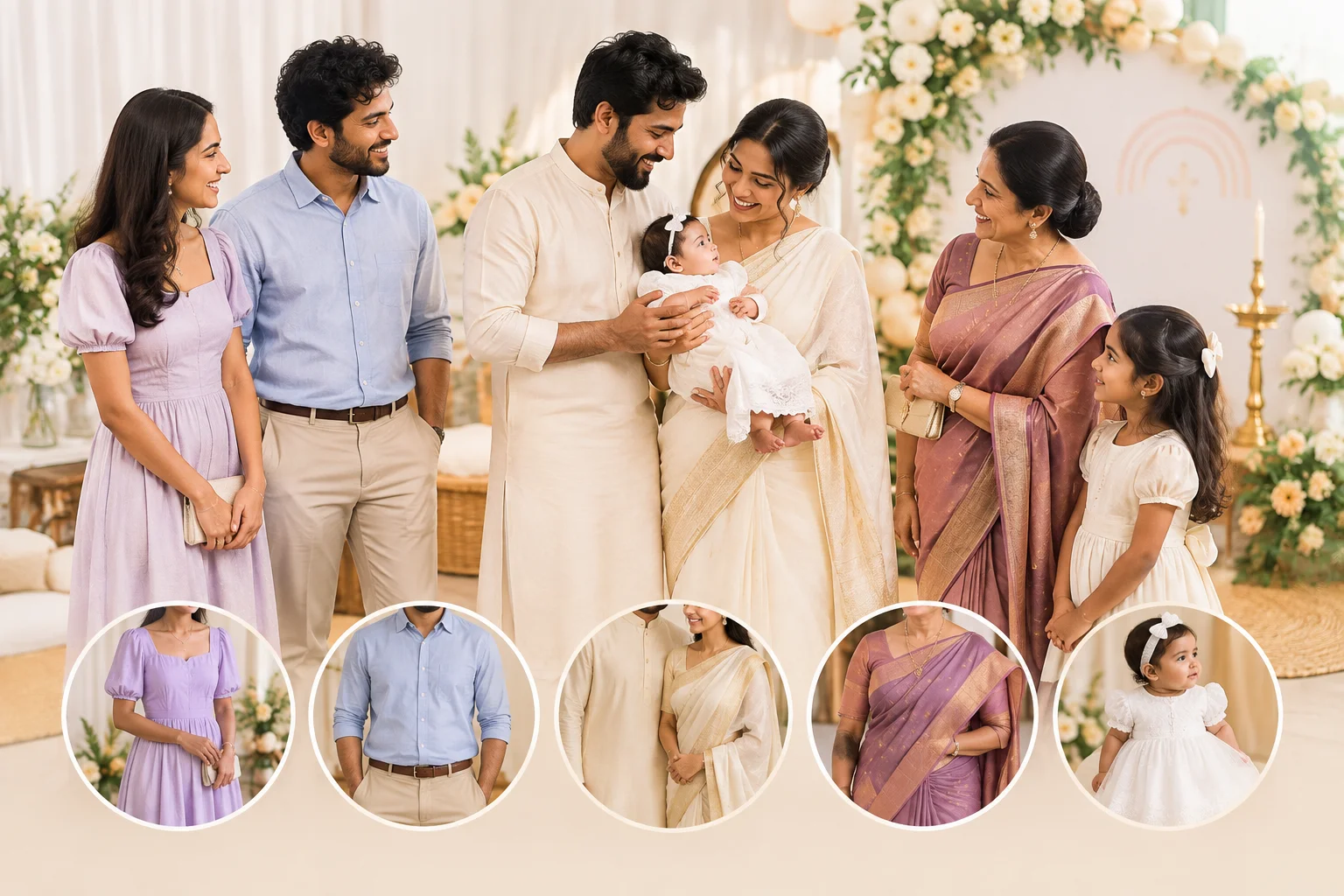
For a baby naming ceremony, smart casual is the safest choice: a neat dress, skirt, trousers or shirt in soft or pastel tones with comfortable shoes. Dress up for a hall or place of worship, and keep it relaxed for a home or garden. Avoid black and head-to-toe white, and follow any guidance on the invitation.
The invitation has arrived, the date is in your diary, and now the real question: what do you wear to a baby naming ceremony? Unlike a wedding or a christening, a naming ceremony has no standard dress code, and a garden gathering can look very different from a ceremony in a hall or a place of worship. Parents have their own worries too, from coordinating outfits to dressing a newborn comfortably for photographs. This guide gives you clear, practical answers. You will find what to wear by venue and season, outfit ideas for women, men and children, advice for parents and baby (including safety), cultural notes, colours to consider and avoid, budget tips and a quick checklist.
Why There Is No Single Dress Code
A baby naming ceremony is a celebration where parents welcome a child into their family and community and announce the baby's name. It is not governed by a legal or religious rulebook the way a wedding or a christening often is, so families set their own tone. Some hold a short ceremony in the living room followed by tea. Others hire a hall, invite fifty guests and serve a full lunch. Many follow a faith or cultural tradition with its own clothing customs.
That variety is why the invitation is your best clue. Look for words like "casual", "garden", "traditional attire" or "smart", and check the venue and time of day. If the invitation says nothing, you can safely follow this rule: dress one step smarter than you would for a family lunch, and one step more relaxed than you would for a wedding.
How the dress code compares with a christening
A christening is a religious service, usually in a church, and guests typically dress more formally and modestly, with covered shoulders and smart footwear. A naming ceremony can be secular, religious or a blend, so the range is wider. A secular home naming usually calls for smart casual. A faith-based naming at a temple, gurdwara, mosque, church or synagogue usually follows that place's expectations. When you are unsure, dress neatly and modestly, and carry a scarf or jacket you can add.
What to Wear to a Naming Ceremony by Venue
|
Venue |
Formality |
What works |
|
Home (living room) |
Relaxed |
Neat, comfortable clothes: a casual dress, blouse and trousers, shirt and chinos. Shoes you can remove if the hosts prefer. |
|
Garden or park |
Relaxed to smart casual |
Light fabrics, flat or block-heel shoes, a layer for wind or shade. Avoid stilettos that sink into grass. |
|
Hired hall or restaurant |
Smart casual to smart |
Dress, jumpsuit or tailored separates; shirt and trousers, with or without a jacket. |
|
Registry or civil ceremony room |
Smart casual to smart |
Similar to a hall; slightly more polished than for a home ceremony. |
|
Place of worship |
Modest and respectful |
Covered shoulders and knees, closed or smart shoes, and a scarf or head covering if the tradition expects it. Ask a family member. |
|
Beach or outdoor retreat |
Casual |
Breathable fabrics, sandals or smart flats, a hat and sun protection. Check whether sand is part of the ceremony. |
Naming Ceremony Outfit Ideas for Guests
For women
• A knee-length or midi dress in a floral print, pastel or solid jewel tone.
• A jumpsuit or wide-leg trousers with a tailored top.
• A skirt and blouse, with a cardigan or blazer for cooler venues.
• Traditional wear such as a saree, salwar kameez, lehenga or abaya, if it suits the occasion and family. Choose comfortable, not overly heavy, fabrics if you will be holding the baby.
• Comfortable flats, wedges or block heels. You may be standing, holding the baby or walking on grass.
For men
• Chinos or smart trousers with a collared shirt, with or without a blazer.
• A light suit for a formal hall or place of worship.
• Traditional attire such as a kurta, sherwani, thobe or barong where the family does.
• Loafers, smart trainers (if the invitation is casual) or dress shoes. Avoid flip-flops.
• Skip the tie unless the invitation or venue calls for it.
For children and teenagers
• Neat, comfortable clothes they can sit and move in: a simple dress, shirt and trousers, or a smart top and skirt.
• Shoes they can walk in. Avoid new shoes that might rub.
• A spare top for spills, especially if food is served.
• For older siblings who take part in the ceremony, ask the parents whether they would like them to match the baby or the family colour theme.
For grandparents and guide parents
Grandparents and supporting adults are often photographed more than anyone, so many choose slightly smarter outfits and colours that complement the parents' palette. If you are taking part in a reading, promise or ritual, choose clothes that are easy to stand, walk and hold a baby in.
Best Colours for a Baby Naming Ceremony
There are no strict colour rules, but some choices are more thoughtful than others.
|
Colour approach |
Why it works |
|
Pastels (blush, mint, powder blue, lavender, soft yellow) |
Gentle and celebratory; photograph beautifully and suit most seasons. |
|
Soft neutrals (cream, taupe, beige, sage) |
Calm and timeless; work for both traditional and modern celebrations. |
|
Jewel tones (emerald, teal, burgundy, navy) |
Elegant for evening, winter or more formal venues. |
|
Florals and gentle prints |
Cheerful and appropriate for daytime garden gatherings. |
|
Colours from the theme |
If the parents mention a colour palette, a nod to it is thoughtful but not required. |
Colours and styles to think twice about
• Head-to-toe white or ivory. Associated with weddings and often worn by the baby or parents in some traditions.
• All black. Can feel sombre in some cultures, though a black dress with colourful accessories is often fine. Check local customs.
• Red in some cultures. It may be celebratory in some communities and reserved for brides or other occasions in others. Ask if unsure.
• Loud slogans or graphics. Keep clothing neutral and respectful.
• Very short, sheer, strapless or revealing outfits at a faith-based or multigenerational gathering.
• Strong perfume. Newborns and some guests are sensitive.
Colour meanings vary widely between communities, so treat this as general guidance, not a universal rule.
What Should Parents Wear to Their Baby's Naming Ceremony?
You are the hosts and the subjects of most of the photographs, and you will probably be feeding, holding and soothing a baby. Plan for comfort first, then photographs.
Tips for mothers
• Choose clothing that allows you to feed or comfort the baby discreetly, such as wrap dresses, button-front tops or stretch fabrics.
• Pick fabrics that hide small spills, such as prints, textured weaves or mid-tone colours.
• Wear shoes you can stand in for an hour or two while recovering from childbirth.
• Be realistic about fit. If your body is still changing, choose something forgiving or adjustable.
• Keep jewellery simple and avoid dangling pieces near the baby.
Tips for fathers and partners
• A smart shirt with chinos or a light suit works for most settings.
• Choose fabrics that cope with being held against by a baby: avoid delicate silks or scratchy textures.
• Bring a spare shirt in case of milk, dribble or spit-up.
Coordinating as a family
Coordinating does not mean matching. A shared palette of two or three colours is enough, for example soft blues and creams, or sage and blush. Siblings can wear tones from the same palette. Decide the palette about two weeks ahead so everyone has time to find something.
What Should the Baby Wear?
Many families choose a special outfit for the baby: a simple white or neutral gown, a christening-style set, a traditional outfit, or an heirloom piece passed down through the family. Whatever you choose, practicalities matter more than perfection.
Safety and comfort first
• Soft, breathable fabrics. Pre-washed cotton is kind to newborn skin. Heavy silk or synthetic fabrics can trap heat.
• Line decorative outfits. Embroidery, lace or metallic thread can scratch delicate skin without a cotton lining.
• Check for choking hazards. Remove or secure loose buttons, beads, sequins and stones.
• Nothing around the neck. Avoid cords, long ribbons or tassels.
• Easy changes. Front-opening outfits, snap closures and wide necklines make nappy changes quick.
• Room to move. Avoid tight waistbands, collars or elastic.
• Weather-appropriate layers. Add a light blanket or cardigan in cool weather, and shade or a sun hat in summer.
Outfit ideas for the baby
• A classic white or cream gown or romper set.
• A soft cotton outfit in the family's colour palette.
• A traditional outfit that reflects your culture, worn over a soft cotton layer.
• An heirloom gown or shawl for the ceremony and photos only, with a comfortable change afterwards.
• A knitted cardigan, bonnet or booties for cooler months.
Always pack a second outfit and a changing kit. Spit-up, nappy leaks and dribble are common, and a quick change means you can still enjoy the party.
What to Wear by Season and Weather
|
Season |
Guests and parents |
Baby |
|
Summer |
Breathable cotton, linen or viscose in light colours. Sun hat, sunscreen, comfortable sandals or flats. |
Light cotton, shade, a sun hat if outdoors. Avoid overheating from heavy gowns. |
|
Autumn |
Layers such as a cardigan or light jacket. Earthy or deep tones suit the season. |
Cotton outfit with a light cardigan or blanket. |
|
Winter |
Warm fabrics, tights or smart trousers, coat, closed shoes. Choose a warm dress for the ceremony itself. |
Warm layers, hat and blanket. Dress in layers you can remove if the room is heated. |
|
Spring |
Light layers, florals, a waterproof jacket or umbrella for showers. |
Soft layers and a waterproof pram cover for outdoor travel. |
|
Monsoon |
Quick-dry fabrics, closed footwear with grip, an umbrella. Avoid long trailing hems. |
Dry, warm layers; keep spare outfits handy. |
Cultural and Religious Dress Considerations
Many communities have clear customs about dress for naming and welcoming ceremonies. The notes below are general illustrations. Customs vary by family, region and place of worship, so always follow the host's guidance.
• Hindu naming ceremonies often involve traditional clothing such as sarees, kurtas and dhotis. Bright or auspicious colours are common, but customs differ by region.
• Sikh gatherings at a gurdwara generally call for modest clothing, covered heads and removing shoes before entering the prayer hall.
• Muslim celebrations such as aqiqah usually call for modest dress, with headscarves or caps often worn by those who normally do so.
• Jewish naming ceremonies vary by community. A synagogue naming usually requires dressier, modest clothing, while a home celebration is often more casual. Some communities expect head coverings.
• Christian dedications and christenings tend to call for smart clothing and modest necklines and hemlines in church.
• Secular ceremonies often welcome any neat, comfortable outfit and may encourage guests to wear what makes them feel celebratory.
If you are a guest from outside the tradition, a polite question to the hosts, such as "Is there anything you would like us to wear?" is always welcome. Wearing traditional dress as a guest is usually appreciated when invited, but check first so it feels respectful.
Dressing for a Naming Ceremony on a Budget
• Shop your wardrobe first. A good dress, shirt or trousers can usually be restyled with accessories.
• Borrow or swap. Friends and family often have appropriate outfits and heirloom baby clothes.
• Rent for one-off outfits such as formal dresses or traditional wear.
• Buy second-hand for baby gowns, children's clothes and formalwear.
• Choose versatile pieces you will wear again, such as a plain dress or neutral blazer.
• Skip dressing the baby in expensive items. A new-looking cotton outfit and a good photograph are all you need.
Common Mistakes to Avoid
• Not checking the invitation or asking the hosts. One short message can save a lot of worry.
• Overdressing or underdressing. Aim for neat and comfortable, not for a wedding or a picnic.
• Wearing new shoes. Blisters are not a good companion to holding a baby.
• Forgetting the weather. Check the forecast and pack layers or an umbrella.
• Choosing difficult fabrics. Silk, sequins and heavy embellishments can scratch the baby and show every stain.
• Skipping a spare outfit for the baby or yourself.
• Ignoring cultural expectations. Ask the family if you are unsure about colours, head coverings or footwear.
• Over-matching. Too-perfect coordination can feel stressful; a shared palette is enough.
• Leaving outfit decisions to the last day. Try everything on at least a week before.
Outfit Checklist
For guests
• Read the invitation and note the venue, time and any dress guidance.
• Check the weather forecast.
• Choose an outfit in soft or neutral colours that you can sit and stand in.
• Choose comfortable shoes suitable for the venue.
• Pack a layer, scarf or jacket.
• Avoid heavy perfume and dangling jewellery.
For parents
• Decide a two or three colour palette about two weeks ahead.
• Choose outfits that allow feeding and comforting the baby.
• Try everything on a week before the ceremony.
• Pick the baby's outfit and a spare, with a cotton layer underneath.
• Pack a changing kit, muslin cloths and a spare top for yourself.
• Plan outfits for siblings and grandparents.
Frequently Asked Questions
What do you wear to a baby naming ceremony?
Smart casual is the safest choice: a neat dress, skirt, trousers or shirt in soft, pastel or neutral tones, with comfortable shoes. Dress up for a hall or place of worship and keep it relaxed for a home or garden.
Is there a dress code for a naming ceremony?
Not a standard one. Dress depends on the family, venue and tradition, so check the invitation or ask the hosts.
Can I wear white to a naming ceremony?
It is best to avoid head-to-toe white, as it is often worn by the baby or parents and associated with weddings. A small amount of white in a print or accessory is usually fine.
Can I wear black to a naming ceremony?
In many places, yes, especially when styled with colour. In some cultures black is associated with mourning, so it is better to choose a brighter colour if you are unsure.
What should I wear to a naming ceremony at home?
Neat, comfortable clothes such as a casual dress, shirt and chinos or a smart blouse and trousers. Choose shoes that are easy to remove if the hosts ask.
What should the mother wear to a naming ceremony?
Something comfortable that allows easy feeding and holds up to being hugged and photographed. Pick a flattering, forgiving outfit in colours that coordinate with the baby's outfit.
What should a baby wear to a naming ceremony?
A soft, breathable cotton outfit that is easy to change. White, cream, pastel or traditional outfits are popular. Avoid loose buttons, tight closures or heavy fabrics.
Do guests need to dress up for a naming ceremony?
Not usually. Neat and comfortable is enough for most gatherings, but dress more smartly for formal venues, evening events or places of worship.
Can I wear traditional attire as a guest?
Often yes, and it is usually appreciated. Check with the hosts if you are not from the tradition, and choose comfortable fabrics if you will hold the baby.
What you wear to a baby naming ceremony matters far less than being there. Choose something neat, comfortable and respectful of the venue and the family, keep to soft colours if you can, and follow any guidance the hosts give. If you are the parent, plan for comfort and practicality first, and remember that the photographs you will treasure are the ones where everyone looks happy.
And once the outfits are chosen, the name is the finishing touch. If you are still exploring names, their meanings or cultural roots, Jollynames.ai is a friendly place to look for a name that fits your family.